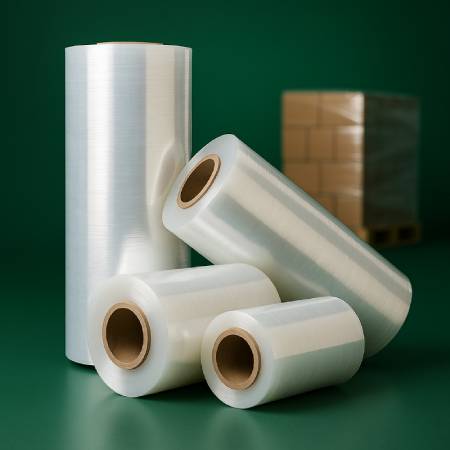
PVC stretch film is a type of plastic film used for safe and organized packaging of products across various industries, from food to agricultural goods. It helps reduce waste, protects items from contamination, and makes handling and transportation easier. Thanks to its transparency, surface cling, and controlled stretch, stretch film has a fixed role in professional packaging lines, and choosing the right type has a direct impact on warehousing and logistics performance. A company like Novavaran Keyhan Plastic Parsam, with a long history in producing specialized films, provides stable and reliable supply of this type of film for industrial and packaging units.
What Does PVC Stretch Film Mean?
This film is a thermoplastic polymer based on PVC, produced in a thin and elastic form. When stretched over a product, it tightens around the surface and creates surface adhesion. This structure enables compact packaging, protection against moisture and contamination, and reduces product movement during transportation. In industrial production of stretch film, controlling thickness, width uniformity, stretch level, and transparency is critical, as these characteristics determine performance in both automatic and manual packaging lines. A manufacturer such as Novavaran Keyhan Plastic Parsam, with long-standing experience in film extrusion, designs and produces this film based on the real needs of packaging units and actual operating conditions.
Simply put, PVC stretch film is the thin plastic wrap commonly used around cartons, fruit crates, multi-pack bundles, or even some food containers to keep them clean, secure, and closed during transport. When stretched over a product, it clings firmly and acts as a transparent protective layer, allowing neat stacking on pallets and shelves. For businesses that deal with packaging and logistics on a daily basis, using the right stretch film is part of maintaining warehouse order and preserving product quality until delivery to the customer.
What Are the Features of PVC Stretch Film?
The features of PVC stretch film are mainly defined by the combination of controlled stretch, surface cling, transparency, and specific thermal behavior. Together, these properties make it suitable for wrapping pallets, cartons, food products, and sensitive items. In industrial production, thickness uniformity, width stability, surface quality, and mechanical stability during stretching are key factors, each directly affecting performance on the packaging line. A producer like Novavaran Keyhan Plastic Parsam adjusts these characteristics based on working conditions and product type.
Stretchability and Surface Cling
Stretchability and surface cling are the most important characteristics of PVC stretch film. They allow tight packaging while using less material, helping stabilize pallet loads, reduce movement during transportation, improve warehouse safety, and control packaging costs. On the other hand, if high stretch is combined with incorrect tension settings or unsuitable equipment, it may lead to localized tearing, excessive thinning in certain areas, and uneven protection—making precise adjustment on the packaging line essential.
Transparency and Surface Gloss
This feature allows labels, barcodes, dates, and product information to remain visible without opening the package. Transparency simplifies visual inspection in warehouses, speeds up product identification, and improves inventory management, especially in food packaging and retail products. However, glossy transparent surfaces can be more sensitive to scratches and impact marks, and in brightly lit environments, light reflection may reduce label readability, requiring more careful handling and arrangement.
Thermal Behavior and Temperature Sensitivity
Thermal behavior and temperature sensitivity are important characteristics of PVC stretch film, especially in cold-chain logistics or warm storage environments. Within its designed temperature range, this film remains flexible and effective, making it suitable for conventional cold storage and standard warehouse conditions. At lower temperatures, there is a risk of brittleness and reduced stretch, while at higher temperatures, excessive softness, deformation, and reduced mechanical strength may occur. For this reason, selecting the appropriate grade and relying on the manufacturer’s formulation expertise plays a key role in minimizing these limitations.
What Are the Applications of PVC Stretch Film?
In food packaging, PVC stretch film helps protect products from contamination, moisture, and direct environmental contact, maintaining stable storage conditions. It is commonly used for packaging trays of meat, poultry, vegetables, and certain ready-to-eat foods. By forming a transparent, adhesive layer over the container, it allows easy visual inspection of product condition.
In fresh fruit and vegetable packaging, PVC stretch film focuses on organized stacking, reduced waste, and improved visual appeal. Its controlled stretch enables trays and packs to be wrapped neatly and securely without crushing the contents, reducing mechanical damage during transportation and distribution while preserving the product’s appearance.
In pallet and carton packaging across various industries, PVC stretch film is used to stabilize loads, prevent shifting, and reduce damage during transport. By wrapping around pallets or groups of cartons, it creates a stable unit, lowering the risk of breakage, falling, or accidental opening, and simplifying warehouse management.
In retail stores and wholesale units, PVC stretch film is used to organize products, combine multiple items into one package, and prepare goods for direct display. It allows multi-item bundles such as bottles, cans, or combo packs to stay together without extra boxes, creating a tidy and controlled appearance on shelves.
In restaurants, hotels, and food service operations, PVC stretch film is mainly used for short-term storage and maintaining hygiene. Containers holding raw ingredients, semi-prepared foods, or reusable leftovers are covered with this film to prevent odor transfer, cross-contamination, and surface drying, while keeping refrigerators and cold rooms organized.
In agriculture and farm-product packaging, PVC stretch film is used to prepare products for distribution in wholesale and retail markets. Crates of fruits and vegetables, boxes of fresh produce, and certain export packages are wrapped to protect them from dust and contamination while maintaining sufficient strength during loading and unloading. In this area, an experienced industrial producer like Novavaran Keyhan Plastic Parsam can tailor stretch film specifications based on transport conditions, product type, and target market standards.
PVC stretch film is also used in packaging certain non-sterile hygienic and pharmaceutical products, where the goal is to keep packages clean, prevent unintended opening, and simplify visual identification on shelves. By adding a transparent protective layer over boxes and small packages, it reduces scratching and accidental opening during transport and makes inventory control in pharmacies and healthcare warehouses easier.
Difference Between PVC Stretch Film and Polyethylene Stretch Film
The difference between PVC and polyethylene stretch films starts with material composition, mechanical behavior, and application conditions. PVC stretch film generally offers higher transparency, greater gloss, and stronger surface cling, making it suitable for food packaging, fruits and vegetables, and retail applications. It performs well even at lower thicknesses. In contrast, polyethylene stretch film is typically chosen for pallet wrapping, cartons, and heavy loads, providing higher tensile strength and tear resistance at an industrial scale. It is better suited for use with automatic and semi-automatic stretch-wrapping machines.
Another difference lies in thermal behavior, environmental considerations, and packaging strategy. Polyethylene-based films are generally easier to recycle and simpler to manage within industrial waste systems, maintaining better stability across a wider range of storage temperatures. PVC stretch film performs optimally within a defined temperature range and is often selected for consumer-facing applications where appearance and presentation matter. In practice, a facility with access to a wide range of agricultural and packaging films—such as Novavaran Keyhan Plastic Parsam—can select the appropriate film based on product type, transport conditions, and environmental policies.
Buying PVC Stretch Film
Purchasing PVC stretch film delivers the best results when the buyer clearly understands which grade, thickness, and technical characteristics suit their packaging line and product type. This is where the role of an experienced industrial manufacturer becomes critical. Novavaran Keyhan Plastic Parsam, active since 1973 and producing specialized films since 1978, provides the ability to select and supply stretch film tailored to the type of goods, packaging method, storage conditions, and transportation requirements. Rather than offering a generic product, the company focuses on adjusting technical specifications to real operational needs, turning the purchase of PVC stretch film into an informed and reliable decision.
Conclusion
PVC stretch film shows its true value in the supply chain when both formulation quality and correct application are carefully managed. This is where technical expertise meets real market needs. With decades of experience in producing agricultural and packaging films, Novavaran Keyhan Plastic Parsam designs and manufactures PVC stretch film as a tool for safer transportation, organized warehousing, and professional product presentation—helping industrial units choose stretch film based on data, experience, and standards rather than guesswork.