Here’s your full English translation of the article, adapted for publication on the Keyhan Plastic website. The translation maintains a natural, professional marketing tone while remaining accurate to the original Persian content and utilizing SEO-friendly phrasing for keywords such as helio printing, heliogravure printing, and the heliogravure printing process.
Helio Printing and Heliogravure
In the packaging industry, selecting the right printing method is crucial for achieving optimal quality, minimizing production costs, and enhancing market appeal. One of the most powerful and widely used techniques is Helio printing, also known as heliogravure printing, which is applied in the production of various polymer films and flexible packaging rolls.
In this article by Keyhan Plastic, we’ll explore the concept and process of heliogravure printing, its advantages, applications, and key technical considerations.
What Is Helio Printing?
In Iran’s packaging industry, the term Helio printing generally refers to the gravure printing method (also known as intaglio printing).
In this process, the desired design or image is engraved into the surface of a metal cylinder. Ink fills these tiny engraved cells and is then transferred directly onto the film or roll surface.
Thanks to its high precision and color clarity, this technique is ideal for professional and luxury packaging prints that demand detailed graphics and consistent results.
What Is Heliogravure Printing?
The word Heliogravure literally means “sun engraving,” but in practice, it refers to the same gravure printing method. The difference lies only in naming — “Helio” is simply a shortened version of “Heliogravure.”
Both use engraved metal cylinders (or printing plates) with cells of varying depth that control the volume of ink. The deeper the cells, the stronger and more vivid the printed color will appear.
How the Heliogravure Printing Process Works
The heliogravure printing process consists of several key technical stages, each of which influences the final print quality:
-
Cylinder Preparation
A metal cylinder made of cast iron or steel is coated with nickel or chrome.
The design is then engraved in reverse on its surface using mechanical or laser engraving.
-
Surface Finishing
The cylinder surface is polished to ensure that ink remains only in the engraved cells.
-
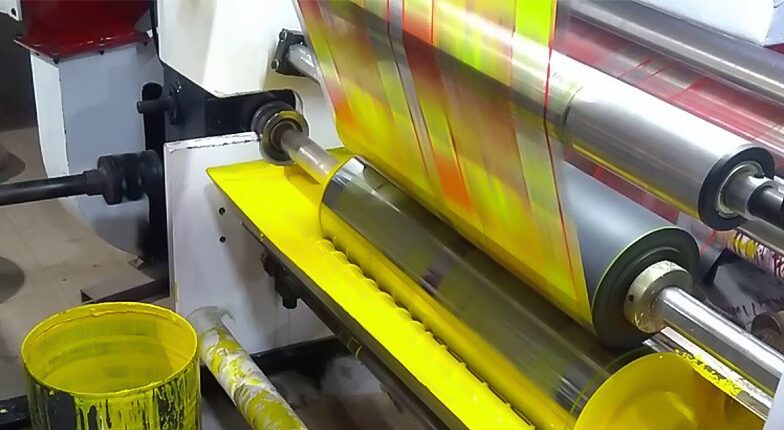
Ink Transfer
The cylinder rotates inside an ink reservoir. A doctor blade wipes excess ink from the surface, leaving ink only in the engraved cells.
-
Printing on Film
The ink from the cylinder is transferred directly to the packaging film when the two surfaces come into contact under pressure.
-
Drying
After each color is applied, the film passes through a hot-air tunnel to dry the ink before the next color is printed.
Advantages of Heliogravure Printing
Heliogravure printing offers exceptional print quality and color accuracy. It performs extremely well in high-volume production due to its high printing speed.
Some of the key advantages include:
-
Outstanding image clarity and color consistency
-
Excellent performance for large runs (high-speed and cost-efficient at scale)
-
Compatibility with various polymer films such as BOPP, CPP, PE, and metallized films
-
Durable cylinders that can be reused multiple times
-
Stable color reproduction with minimal fading over time
Disadvantages and Limitations
Despite its benefits, there are some limitations to consider:
-
High initial cost for cylinder production, making it less economical for short runs
-
Time-consuming design changes since re-engraving or modifying a cylinder is complex
-
Requires specialized machinery and an industrial production setup
Applications of Helio Printing in the Packaging Industry
Heliogravure printing is primarily used in the production of flexible and high-quality packaging, including:
-
Food, snack, and dried fruit packaging
-
Metallized film printing for cosmetics and hygiene products
-
Multi-layer films such as BOPP/CPP/PE laminates
-
Industrial and promotional rolls
Technical Tips for Implementing Helio Printing at Keyhan Plastic
-
For maximum cost efficiency, use heliogravure printing for large-volume projects.
-
Test color samples on actual material before mass production to ensure accuracy.
-
Ensure that your film materials can withstand drying tunnel temperatures.
-
Use solvent-based inks with optimal drying time for better adhesion.
-
Clean and re-chrome cylinders after each printing session to extend their lifespan.
Conclusion
Heliogravure printing is one of the most precise and high-quality industrial printing methods available today.
For luxury or high-volume packaging, it’s an ideal choice that delivers durable, colorful, and professional results.
At Keyhan Plastic, we utilize advanced heliogravure technology to achieve world-class print quality on various polymer films — enhancing both the durability and visual appeal of your packaging.
To place an order for custom printed films, visit our dedicated page or contact our expert consultants today.