In today’s modern packaging world, competition isn’t just about visual appeal print quality, color accuracy, and production speed are equally decisive factors for brand success. Among the most widely used and cost-effective printing methods for polymer films, wraps, and flexible packaging is Flexographic Printing, commonly known as Flexo. Due to its affordability and accessibility, this printing technique is a popular choice among manufacturers. In this article by Keyhan Plastic, we’ll explore how flexo printing works, how it differs from other printing methods, and the key advantages of flexographic printing.
What Is Flexographic Printing?
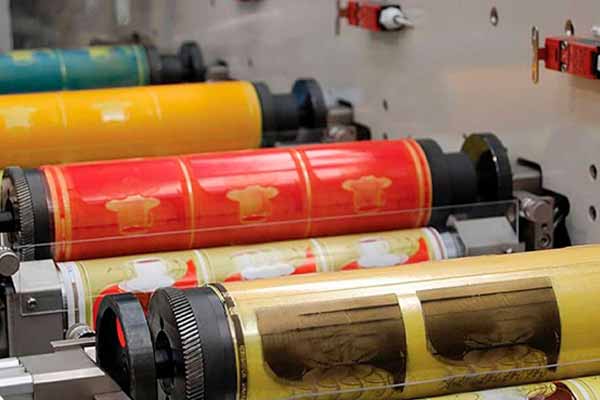
Flexographic Printing (or Flexo) is a relief printing method in which the design is engraved on a flexible plate made of rubber or photopolymer. After being coated with ink, the plate is pressed against the printing surface — such as polyethylene film (printed film), cellophane,paper, or aluminum foil — to transfer the image. Thanks to the flexibility of the plate, flexo printing is ideal for soft, uneven, or flexible surfaces and is widely used for food packaging, hygiene products, and industrial wrapping materials.
How Does the Flexographic Printing Process Work?
The flexographic printing process consists of several key stages, each of which affects the final print quality: Plate Preparation: The graphic design is created as a raised image on a flexible plate. The raised areas transfer the ink onto the printing surface. Ink Transfer: A roller called an Anilox Roll transfers a precise amount of ink from the ink chamber to the printing plate. The microscopic cells on the roller control ink volume and consistency.
- Printing on the Surface: The inked plate makes controlled contact with the surface — film, paper, or foil — transferring the image directly.
- Quick Drying: Water-based or solvent-based inks are dried instantly using a hot-air tunnel, which significantly increases production speed.
- Multi-Color Printing: Flexo presses usually have 4 to 10 color stations, allowing for high-resolution and multi-color printing suitable for full-color packaging designs.
Difference Between Flexographic Printing and Heliogravure
| Feature | Flexographic Printing | Heliogravure Printing |
|---|---|---|
| Printing Type | Relief (Rubber or Photopolymer Plate) | Intaglio (Engraved Metal Cylinder) |
| Setup Cost | Lower | Higher |
| Ideal Production Volume | Medium to High | Very High |
| Design Change Speed | Fast and Easy | Slow and Expensive |
| Ink Type | Water-based or Solvent-based | Mostly Solvent-based |
| Print Quality | High (slightly below Heliogravure) | Very High |
| Typical Application | Bags, wraps, labels, paper | Luxury and high-volume packaging |
Advantages of Flexographic Printing
With technological advances in recent years, flexographic printing has become one of the most popular printing techniques in the packaging industry. The main benefits of flexo printing include:
High Speed and Cost Efficiency:
Flexo presses can print at speeds exceeding 300 meters per minute, making them highly
economical for medium to large print runs.
Lower Setup Costs:
Plate production in flexo is faster and cheaper than in heliogravure, making it ideal
for brands that frequently update their designs.
Versatility Across Materials:
Flexo printing works perfectly on a wide range of materials — including polyethylene (PE), polypropylene (PP), paper, and aluminum foil.
Fast Drying and Clean Printing:
Inks dry quickly, minimizing smudging and ensuring sharp, consistent color output.
Eco-Friendly Printing:
Since many flexo inks are water-based, this method produces significantly less
environmental pollution compared to traditional printing.
Easy Design Change:
Plates can be replaced quickly, allowing manufacturers flexibility when switching designs or SKUs.
Applications of Flexographic Printing in the Packaging Industry
-
Printed polyethylene (nylon) bags and films
-
Food and dairy packaging
-
Multi-layer laminates (BOPP/CPP/PE)
-
Product labels and stickers
-
Promotional and industrial packaging bags
-
Cosmetic and pharmaceutical packaging
For more information about different printing methods — such as Helio Printing — click the related link on our website.
Technical Tips for Flexographic Printing at Keyhan Plastic
- Always test print samples on the actual material before full-scale production.
- The quality of the Anilox Roll and the cleanliness of the Doctor Blade have a direct impact on color uniformity.
- Adjust drying tunnel temperature according to the thickness of the film.
-
Ensure that line thickness and color intensity in artwork match the plate’s
specifications.
- Use standardized inks and monitor viscosity levels for stable color results.
Conclusion
Flexographic printing, or Flexography, is one of the most efficient and versatile printing techniques in the packaging industry. Combining high speed, cost efficiency, design flexibility, and compatibility with diverse ذmaterials, it’s an ideal choice for modern manufacturers. At Keyhan Plastic, we utilize advanced Flexo machinery and an experienced technical team to deliver high-quality printed films, polyethylene bags, and flexible packaging that make your brand stand out. For custom printed polyethylene orders, contact our consultants today and experience professional-grade printing quality.